FICO score and a bit about economics of data business
Last modified at Jul 07, 2024
Who knew data business could be this good in this eleventh edition of Data and Decision
Hello friends!
This edition of Data and Decision will be quite different. Instead of a long-form essay, I’ll share a collection of links around certain topics that I found interesting and might be useful to us.
So then, let’s get started.
You want to build a data business. What do you need to learn first?
Last week, I had a coffee chat with a friend about industries that are common in other countries but still underrated in Indonesia, where we live. At one point in our discussion, he blurted out, “You know, I’ve never seen an equivalent of the FICO score here.” When I tried to reply, I felt my brain get stuck and came up with zero counters. Hmm. Yeah, what’s up with that?
The FICO score is a fascinating business because, as Auren said in his podcast with FICO CEO Will Lansing, it works as both a “standard and currency.” Very few companies can achieve this status. And when you dig deeper (as I did a few days ago, having nothing else to do), we’ll find FICO has some unique characteristics.
First, they’ve publicly opened their algorithm (well, sort of) so that customers can improve their own FICO scores. From the transcript:
[Auren Hoffman] There’s so many articles on the internet about how do you improve your FICO score. What do you do, what are some of the things? This is very, very helpful for our consumer.
[Will Lansing] We don’t want it to be a black box, we don’t want it to be a mystery. And so lenders can provide all kinds of benefits to their consumers by sharing the FICO score and their own mechanisms for making the decision about the loan with the consumer. And they’re basically, you know, teaching the consumer, you want a good FICO score, so you can have better pricing on a loan or more credit capacity, or whatever it is (emphasis added)
- “Will Lansing: Power of Data Standards”, World of DaaS podcast
I’ve been pondering why FICO wasn’t afraid of falling into a Goodhart’s Law situation, where customers only focus on manipulating certain factors to improve their FICO score. We know there are only three ways to improve a “target” value: improve the system, distort the system (e.g., changing the FICO algorithm), and distort the data. Do you think customers are unable to exploit the latter two methods?
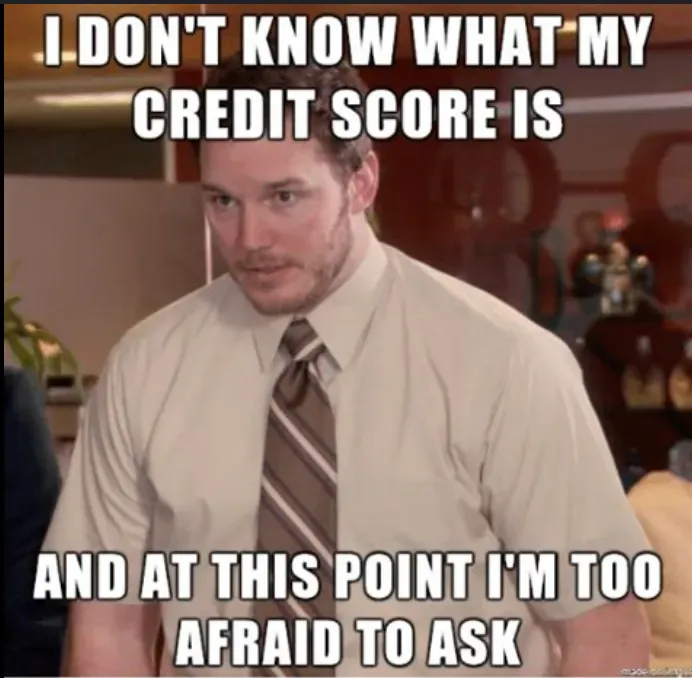
Second, they had a $0 advertising budget.
There are only two legitimate reactions to this fact. First, “Duh! They’re the standard. Successful companies don’t need to advertise themselves.” This was also my initial reaction until I thought a bit and asked, “What other company has a $0 ad budget?” Coca-Cola has a huge market share in my country — I saw their ads on YouTube just this week. That’s why I changed my reaction to “Huh. What does that say about the industry FICO operates in?”
They had a $0 advertising budget. What does that say about the industry FICO operates?
That curiosity led me to the second article, “The Economics of Data Businesses” by Abraham Thomas. So far, this is the best article that highlights nearly all aspects of building a data business. It covers where you might start building it (albeit slowly), how you grow and build the moat (the combination of network effect and economies of scale is amazing), and the longevity of the company.
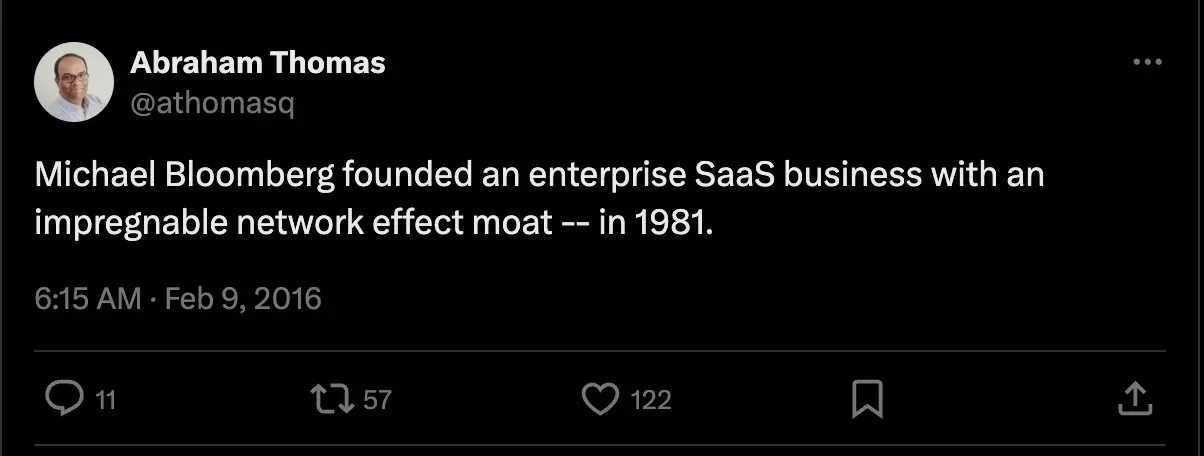
One underlooked fact: Bloomberg did this w/o modern tech infrastructure like what we have now.
Any other articles that you read about data business?
Surely I have!
Another article I skimmed is the “Data-As-a-Service Bible” by Auren Hoffman. Auren is credible on this topic, considering he has built and exited another data business and is currently CEO of yet another data company. He’s as believable as it gets.
I also tried to answer, “What traditional companies are also exploring data businesses?” and found this article about Costco’s advertising initiative. Yeah, I know it’s not a data business per se — but the fact that a conventional powerhouse like Costco is playing around with their data should make us think.
Other links
- [Tweet] How to communicate your vision effectively?
- [Tweet] A collection of chart components that you can copy and paste into your apps.
- [Transcript speech] “Creative Thinking”, speech by Claude Shannon.
📚 Related books: the-book-of-why